- Prof Dr Md Bipul Nazir
- December 6, 2025
- REGENactive
Inflammation, Toxic Chemicals & Lymphatic Health | REGENactive Therapy
Inflammation is often described as the body’s “fire alarm” — a protective mechanism that signals the presence of injury, infection, or harmful substances. While acute inflammation is necessary for healing, chronic inflammation has been identified as the root cause of many modern diseases, including diabetes, cardiovascular disorders, autoimmune diseases, neurodegeneration, and even cancer.
One of the most overlooked drivers of this chronic inflammatory state is the accumulation of toxic chemicals in the body, and one of the most important yet neglected systems that controls this process is the lymphatic system.
Toxic Chemicals: Triggers of Chronic Inflammation
Every day, the human body is exposed to a wide range of toxins:
- Environmental pollutants: heavy metals, pesticides, plastics, industrial chemicals, smoke.
- Lifestyle toxins: alcohol, processed foods, refined sugar, unhealthy fats.
- Biological toxins: metabolic waste, cellular debris, pathogens.
When these toxic chemicals enter or build up in the body, they cause:
- Cellular Stress & Damage
- Toxins injure cells and mitochondria, leading to the release of “danger signals” known as DAMPs (Damage-Associated Molecular Patterns).
- The immune system interprets these signals as threats, sparking inflammation.
- Oxidative Stress
- Toxins create free radicals, unstable molecules that damage DNA, proteins, and membranes.
- This imbalance overwhelms the body’s antioxidant defenses and fuels ongoing inflammation.
- Barrier Breakdown
- Toxins weaken protective barriers like the gut lining, blood vessels, and respiratory tract.
- This allows more harmful substances to leak into the bloodstream, perpetuating the cycle of inflammation.
If toxins are not cleared efficiently, the immune system remains in a “switched-on” state, leading to chronic, low-grade inflammation that silently damages tissues over time.
The Lymphatic System: The Body’s Waste Removal and Immune Defense
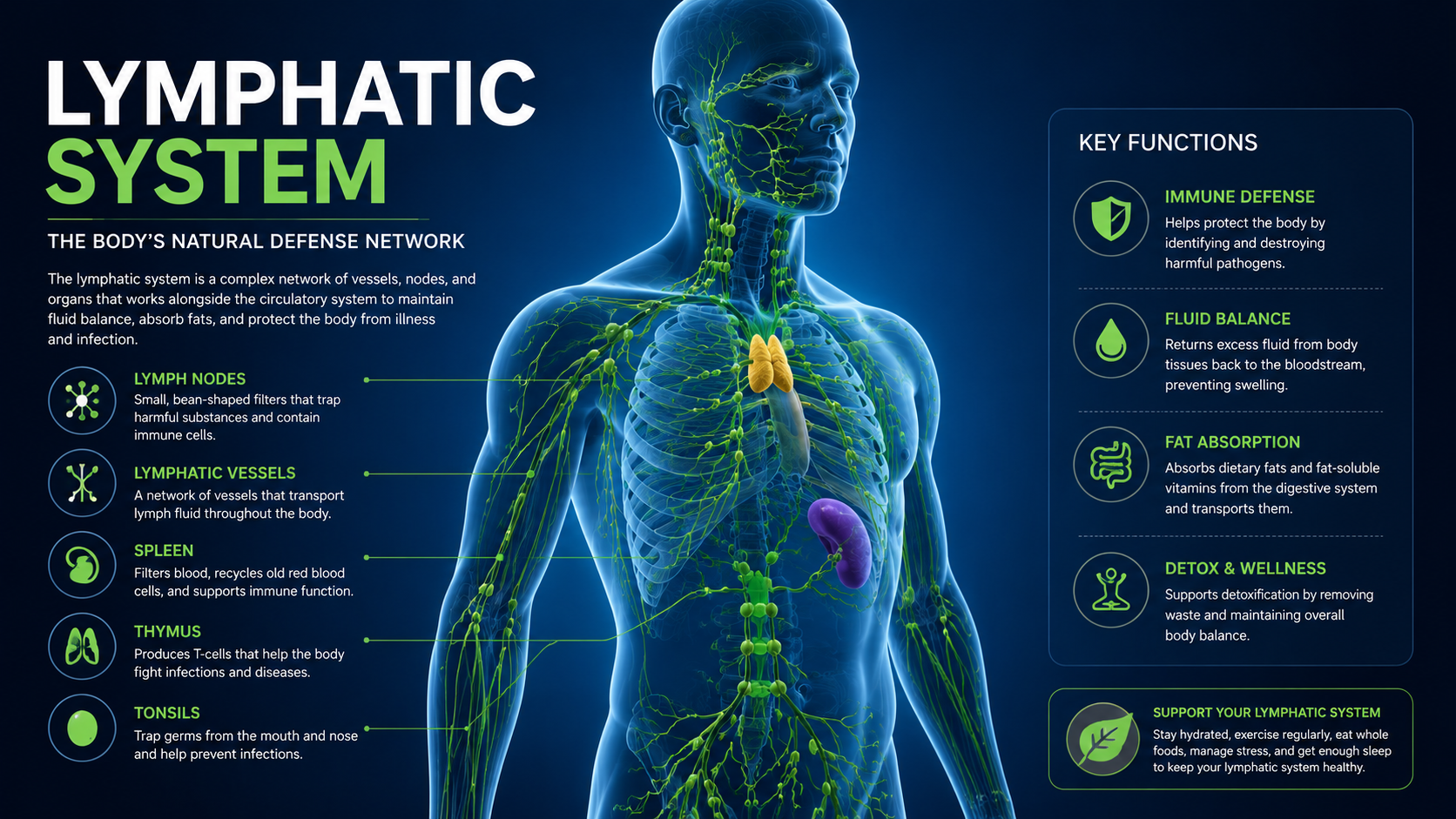
The lymphatic system plays a central role in regulating inflammation by acting as both a detoxification network and an immune defense system. It consists of:
- Lymph fluid: a clear liquid that carries waste, toxins, and immune cells.
- Lymphatic vessels: channels that transport lymph fluid back into circulation.
- Lymph nodes: filter chambers where toxins, pathogens, and abnormal cells are trapped and neutralized.
- Organs: spleen, thymus, tonsils, and gut-associated lymphoid tissue (GALT).
Key Functions in Inflammation Control
- Detoxification
- The lymphatic system removes metabolic waste, toxins, and excess fluids from tissues.
- This prevents toxic buildup, which is a major source of inflammation.
- Immune Regulation
- Lymph nodes act as checkpoints or “chambers” where immune cells meet toxins and pathogens.
- This is where the immune system decides whether to mount a strong inflammatory attack or a controlled healing response.
- Nutrient Transport
- It carries fats and fat-soluble vitamins (A, D, E, K), which are crucial for regulating inflammation and supporting cellular repair.
When the Lymphatic System Fails
If the lymphatic system becomes sluggish, overloaded, or blocked, toxins begin to accumulate in tissues. This creates the perfect environment for chronic inflammation.
Consequences of lymphatic dysfunction include:
- Persistent inflammation leading to joint pain, fatigue, and autoimmune disorders.
- Fluid retention (edema, lymphedema) due to poor drainage.
- Weakened immunity, making the body prone to infections.
- Cancer risk, since malignant or abnormal cells are not effectively filtered and destroyed.
In short, an inefficient lymphatic system allows toxic chemicals to remain in the body, keeping the inflammatory “fire” burning continuously.
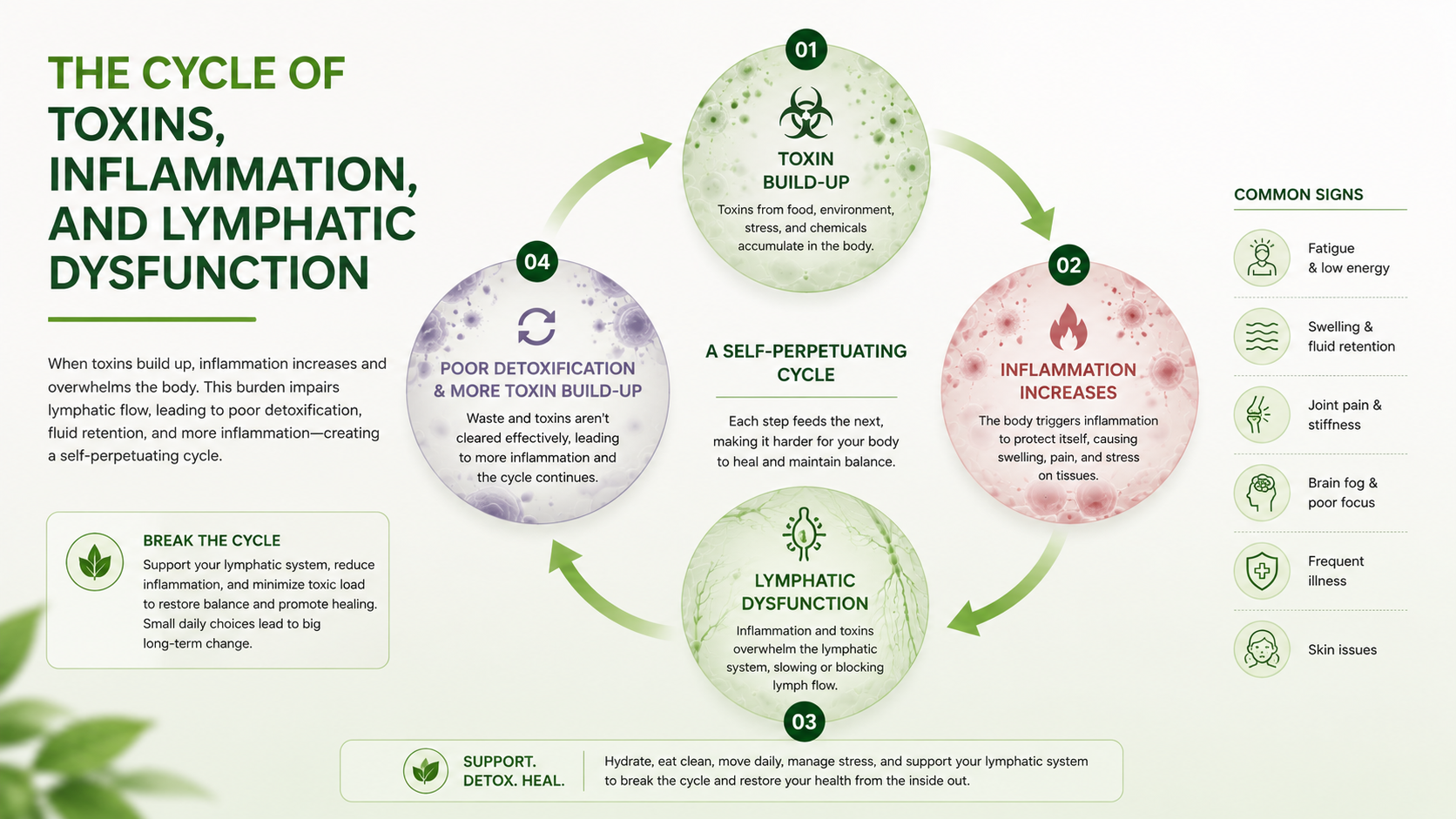
The Cycle of Toxins, Inflammation, and Lymphatic Dysfunction
- Toxins enter the body → through food, water, air, or internal waste.
- Cells are damaged → releasing danger signals that trigger inflammation.
- If the lymphatic system functions well → toxins are filtered, inflammation resolves.
- If the lymphatic system is sluggish → toxins accumulate, inflammation becomes chronic.
- Chronic inflammation → leads to disease progression (diabetes, heart disease, cancer, neurodegeneration).
Breaking the Cycle
To prevent and reverse chronic inflammation, supporting the lymphatic system is as important as reducing toxic exposure. Key strategies include:
- Detox lifestyle: eat whole, clean foods; reduce processed sugar and trans fats; limit alcohol and smoking.
- Hydration: water is essential for lymph flow.
- Movement: exercise, stretching, and deep breathing stimulate lymph circulation.
- Sleep & stress management: both influence immune balance and inflammation.
- Therapeutic support: massage, sauna, and advanced regenerative therapies can accelerate lymphatic detox and repair.
Conclusion
Chronic inflammation is not simply a symptom of disease — it is the root cause behind many modern health conditions. Toxic chemicals are major triggers of this process, and the lymphatic system is the body’s natural defense against it.
By protecting the body from toxins and maintaining a healthy, efficient lymphatic system, we can significantly reduce inflammation, restore balance, and prevent long-term disease.
Toxins ignite the fire. Inflammation spreads the flame. The lymphatic system is the extinguisher — if we keep it strong, the body can heal itself.
— Prof. Dr. Md. Bipul Nazir