- Prof Dr Md Bipul Nazir
- July 7, 2025
- REGENactive
Stretching Is Life:
The Forgotten Therapy for Every Organ
In the fast-paced world we live in, many people are unaware of one of the most powerful tools they already have for maintaining good health—stretching. Stretching is not just for athletes or those in physiotherapy. It is a daily necessity, much like eating, breathing, and sleeping. It is a natural practice that awakens, activates, aligns, and strengthens the body—organ by organ, system by system.
Just like a pilot inspects and stretches the wings of a plane before takeoff, our body, too, requires conscious daily stretching to ensure proper mobility, alignment, and functionality. Without it, stagnation builds, organs tighten, circulation slows, and inflammation takes hold.
Stretching is the simplest healing habit that doesn’t require a doctor, machine, or medication. Yet, it has the power to rejuvenate every organ, improve emotional wellbeing, and even stimulate the brain’s natural chemicals for joy, focus, and calm.

Why Stretching Should Be Daily
Stretching:
• Enhances blood and oxygen flow to organs
• Activates the lymphatic and circulatory system
• Releases tension stored in the muscles and fascia
• Improves flexibility, posture, and mobility
• Reduces chronic inflammation and stiffness
• Boosts organ performance by improving internal space and movement
• Supports natural detoxification and immunity
Stretching for Specific Organs and Systems (with step-by-step guidance)
1. Brain and Nervous System
Stretch: Neck rolls, upward spine lengthening, shoulder release
Benefits: Improves blood flow to the brain, releases tension in cranial nerves, enhances clarity, reduces headaches and anxiety
Steps:
• Sit or stand tall.
• Gently roll your neck in a circle, clockwise then counterclockwise (5 times each).
• Interlace fingers, stretch arms overhead, push palms upward and hold for 20 seconds.
• Slowly release and repeat twice.
2. Lungs
Stretch: Chest opener, deep backbend, diaphragm stretch
Benefits: Expands lung capacity, supports better oxygen exchange, improves breathing rhythm
Steps:
• Stand with feet shoulder-width apart.
• Interlace hands behind your back, straighten arms, lift your chest upward.
• Take a deep breath in and hold for 10 seconds.
• Exhale slowly and relax. Repeat 3–5 times.
3. Heart and Circulatory System
Stretch: Forward bend, spinal twist, shoulder stretches
Benefits: Enhances circulation, reduces blood pressure, supports heart rate stability
Steps:
• Stand tall, inhale, lift arms overhead.
• Exhale and slowly fold forward, reaching toward the floor.
• Hold for 20 seconds, breathe slowly.
• Sit cross-legged, twist to one side while keeping spine upright. Repeat on the other side.
4. Kidneys
Stretch: Side bends, lower back flexion
Benefits: Improves fluid balance, supports detox, relieves back tension
Steps:
• Stand or sit upright.
• Raise one arm overhead and bend sideways from the waist.
• Hold 20 seconds, then switch sides.
• Gently round your lower back forward in a seated position, hugging knees.
5. Liver
Stretch: Torso twists, upward stretch with abdominal engagement
Benefits: Boosts liver detoxification, aids digestion, relieves congestion
Steps:
• Sit upright.
• Cross your right hand to left knee and twist torso left. Hold 20 seconds.
• Repeat on the other side.
• While standing, reach arms upward, contract core slightly and breathe deeply.
6. Intestines and Digestive Tract
Stretch: Seated forward fold, cat-cow movement
Benefits: Stimulates digestion, reduces bloating, promotes gut motility
Steps:
• Sit with legs extended, reach forward toward toes.
• Hold 30 seconds, repeat 2–3 times.
• Move onto all fours, arch the back up (cat), then dip the belly down (cow), repeat slowly 10 times.
7. Spine and Bones
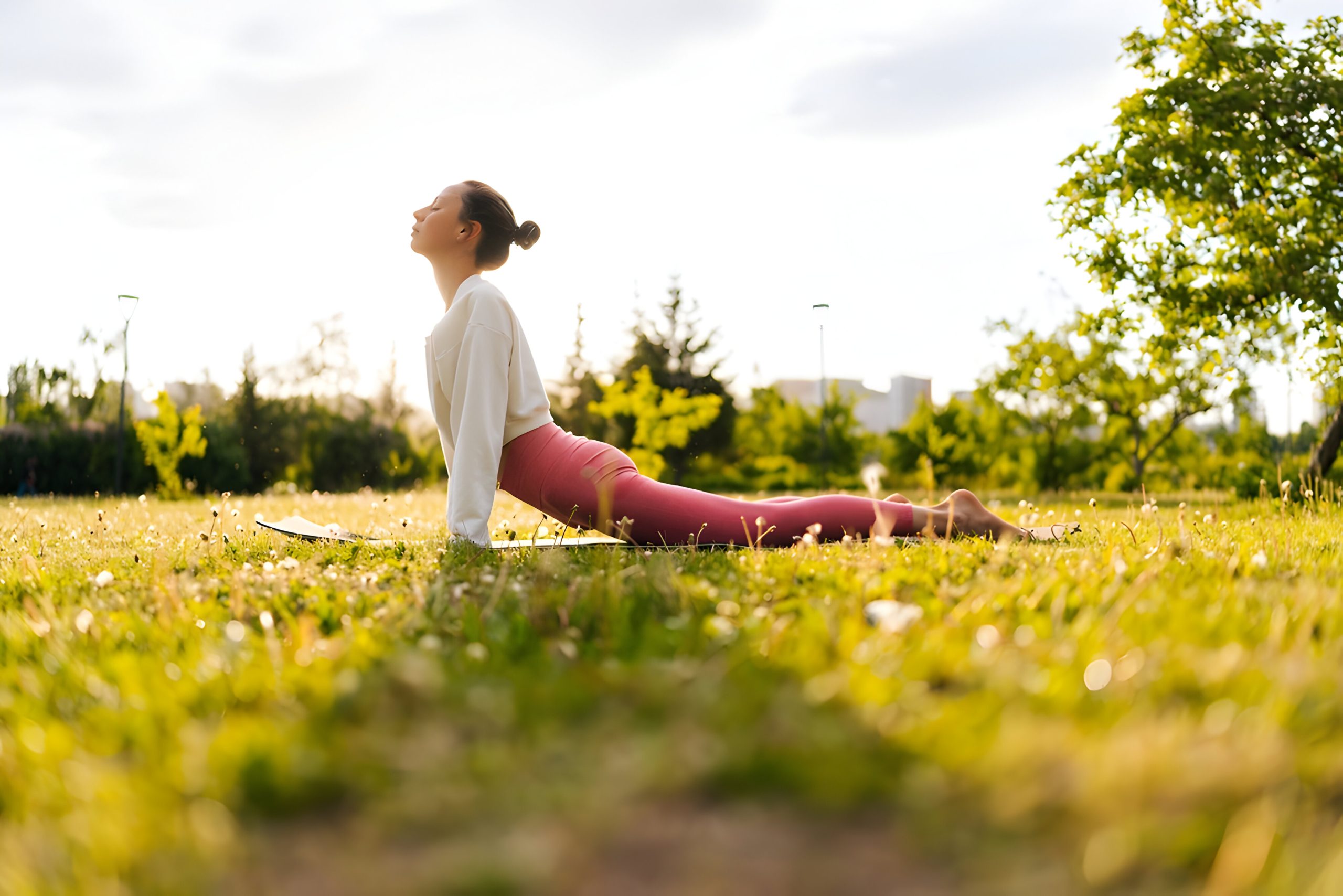
Stretch: Spinal lengthening, cobra pose, gentle rotation
Benefits: Improves posture, releases pressure on nerves, reduces joint pain
Steps:
• Lie on your belly, place palms under shoulders, gently lift upper body (cobra).
• Hold 15 seconds, repeat 3 times.
• Lie on your back, hug one knee to chest and rotate it to the side. Switch sides.
8. Prostate and Pelvic Floor (Men) / Reproductive Organs (Women)
Stretch: Butterfly pose, pelvic tilts
Benefits: Enhances pelvic circulation, reduces stagnation, improves hormonal balance
Steps:
• Sit with soles of feet together, knees dropped outward (butterfly pose).
• Gently press knees downward, hold for 30 seconds.
• Lie down, bend knees, tilt pelvis up and down slowly 15–20 times.
9. Lymphatic System
Stretch: Whole-body stretching, jumping or gentle shaking, neck stretches
Benefits: Activates drainage, detoxification, supports immune health
Steps:
• Stand and stretch arms and legs in all directions.
• Gently bounce or shake your body for 30 seconds.
• Do neck stretches and light tapping over lymph node areas (neck, armpits, groin).
10. Whole-Body Circulation
Stretch: Sun salutation (yoga flow), inversion poses like legs-up-the-wall
Benefits: Boosts full-body blood flow, resets energy levels, improves detox
Steps:
• Practice a slow sun salutation: reach up, fold forward, step back into plank, cobra, downward dog.
• Then lie on your back, place legs up against a wall for 5 minutes.
The Simplicity of Healing
Stretching is free. It’s accessible. It’s natural. But it must be practiced consistently. Whether you’re an executive, a mother, an elder, or a teenager—daily stretching aligns your systems and brings order to chaos inside the body.
In my years of research and global wellness practice, I have seen chronic fatigue, digestive issues, hormone imbalances, poor sleep, even emotional distress improve dramatically with daily structured stretching routines.
Health is not only about treatment. It is about maintenance.
So let us adapt stretching into our lives as an essential daily health ritual—not an optional activity. Because when the body flows, the mind clears. And when the systems align, healing becomes automatic.
Let your body breathe, move, stretch—and thrive.