- Prof Dr Md Bipul Nazir
- January 25, 2026
- REGENactive
Breast Cancer: Incident Trends and Challenges
Global Overview
Breast cancer is the most common cancer among women worldwide. In 2020, there were approximately 2.3 million new breast cancer cases, and it caused about 685,000 deaths globally. Incidence is rising, and projections suggest new cases could exceed 3.2 million per year by 2050, driven by aging populations and lifestyle risk factors. Most diagnoses and deaths occur in women over 50, but younger women are increasingly affected.
Malaysia
In Malaysia, breast cancer is the leading cancer in women, accounting for about 31 % of all female cancer cases. The age-standardized incidence rate is approximately 34-39 per 100,000 women. Notably, a significant portion of Malaysian women with breast cancer are diagnosed at younger ages than in Western populations — about 13.6 % of cases occur before age 40, compared with around 5 % in the United States.
Southeast Asia
Across Southeast Asia, breast cancer incidence varies by country but shows a rising trend overall. For example, population data show differences in incidence and mortality across nations like Malaysia, Singapore, and Thailand, generally reflecting both healthcare system differences and lifestyle factors.
In many Asian countries, organized population-wide screening programmes are limited or not widely accessible, contributing to later-stage diagnosis and higher mortality ratios than in high-income regions.
How Breast Cancer Develops
Breast cancer is not a single disease but a group of disorders that arise when normal breast cells begin to grow uncontrollably and invade surrounding tissue. Key biological processes include:
- Genetic mutations — Changes to DNA in breast cells that affect cell growth control.
- Hormonal influences — Estrogen and progesterone can promote growth in some breast cancers.
- Tumour microenvironment changes — Cancer cells interact with surrounding stroma and blood vessels, supporting growth and spread.
Limitations of Current Screening
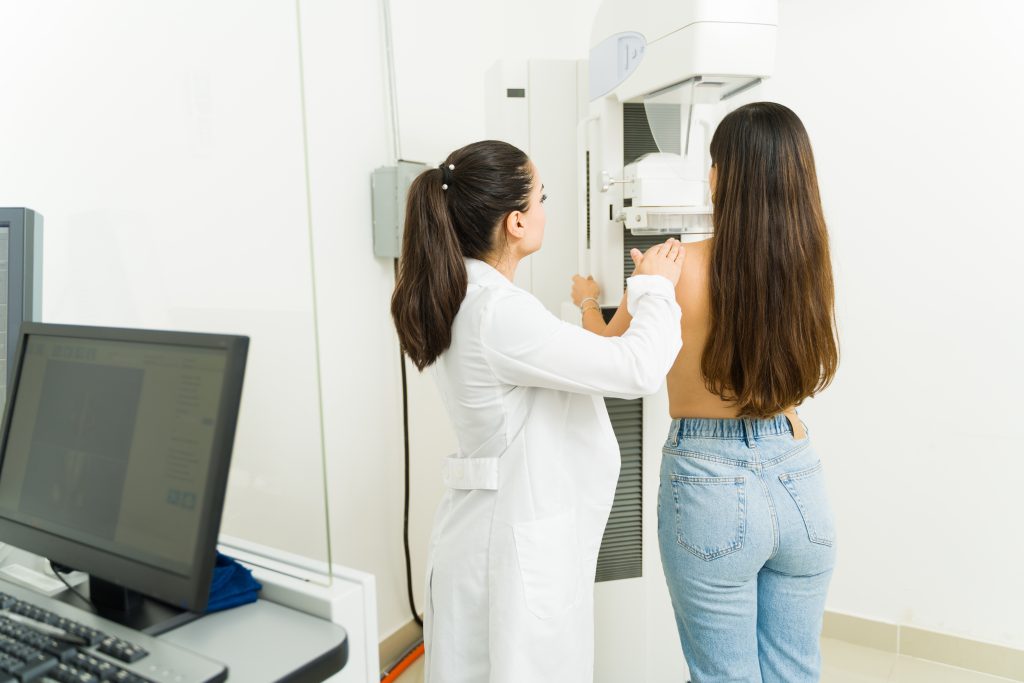
Mammogram
Mammography remains the gold standard for population screening and can reduce mortality when implemented regularly. However:
- Sensitivity varies, and 10–30 % of cancers can be missed, particularly in women with dense breasts.
- Opportunistic screening uptake is generally low in many Asian communities, with mammogram usage below 30 % in eligible groups.
- Younger women with dense breast tissue often receive less accurate results because dense tissue and tumors both appear white on a mammogram.
Ultrasound and CT
These imaging tools can complement mammography, especially in women with dense breasts or symptoms, but they are often only used after symptom detection rather than proactively.
Clinical and Self-Examination
Clinical breast examination and self-examination can help identify abnormalities earlier but are inconsistent in use and sensitivity. Clinical uptake may be influenced by fear, misconceptions, and lack of awareness.
Physical Signs of Breast Tissue Dysfunction
While imaging is essential, physical assessment adds valuable clinical context:
- Persistent tenderness, swelling, or pain in specific quadrants of the breast can reflect local dysfunction of tissues or inflammation.
- Pain occurring with light pressure (e.g., near the nipple or specific clock positions around the breast) can correlate with deeper structural and functional alterations within breast tissue.
- Such physical signs are not by themselves diagnostic of cancer, but they can indicate areas of impaired circulation, lymphatic congestion, or early tissue distress that warrant further medical evaluation.
From a clinical perspective, changes in tissue mechanics, pain scores, and tenderness patterns should be documented and tracked over time alongside imaging and biomarkers.
Regenerative Therapy and Breast Health
There is growing interest in how regenerative approaches might support tissue repair and overall functional health. While evidence in breast cancer specifically is still emerging, the broader field of regenerative medicine has demonstrated:
Tissue Repair and Regeneration
- Regenerative medicine — including stem cells and tissue engineering — aims to restore normal tissue structure and function after injury. This includes enhancing blood flow and repairing damaged extracellular matrices.
Enhanced Circulation and Healing
- Improving microvascular circulation and lymphatic flow is central to tissue healing in many regenerative therapies. Better circulation can help deliver oxygen, nutrients, and anti-inflammatory signals, supporting tissue integrity. This kind of systemic improvement to tissue environments may help reduce chronic inflammation and cellular stress, factors that contribute to tumor progression.
Stem Cells and Immune Modulation
- Research into mesenchymal stem cells and related regenerative strategies explores their ability to modulate immune responses, deliver targeted therapies, and support recovery of tissue architecture after injury or surgery. However, clinical application in active cancer treatment remains experimental and is focused more on reconstruction, immunotherapy delivery, or adjunctive therapies rather than standalone prevention.
It’s important to note that while regenerative therapies show promise in repair and reconstruction, their role as a preventive treatment against cancer initiation is not yet established in clinical oncology. Claims about “protection thousands of times better” are not supported by current clinical evidence.
Regenerative and advanced therapies should be positioned as complementary health support — improving tissue quality and potentially enhancing resilience — rather than as proven cancer vaccines or primary prevention. However, optimizing tissue health and systemic physiology is a logical extension of preventive care.
A Practical, Integrated Approach to Prevention
For women seeking better breast health, the best current strategy combines:
- Risk assessment and risk-regular screening starting appropriately early based on family history and density of breast tissue.
- Clinical breast examinations and patient education to empower women to monitor changes and seek timely evaluation.
- Lifestyle management — diet, physical activity, weight optimization — which may influence overall cancer risk.
- Regenerative and functional assessments to identify areas of tissue dysfunction early and intervene with therapies aimed at restoring circulation, reducing inflammation, and improving structural health.
The goal should always be to detect abnormalities at the earliest possible stage and maintain optimal tissue and immune function, recognizing that early detection substantially improves survival outcomes.

Summary
Breast cancer remains a major health burden in Malaysia, Southeast Asia, and globally, with incidence rising and many cases detected at advanced stages. Standard screening tools like mammography are essential but have limitations, particularly in younger women with dense breast tissue. Adding thorough physical assessments, routine clinical exams, and broader awareness can help bridge gaps in early detection.
Regenerative science offers promising avenues for supporting tissue repair and functional health, but it should be integrated into a broader preventive and screening framework rather than viewed as a standalone cure or guarantee of prevention.
Empowering women with knowledge, combining advanced diagnostics with manual assessments, and integrating supportive regenerative approaches can create a more responsive and proactive breast health strategy for the future.